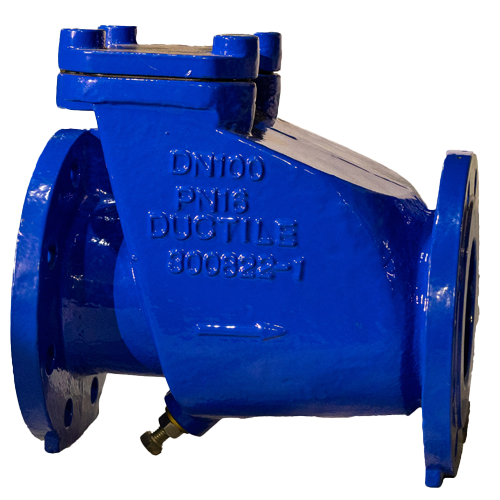
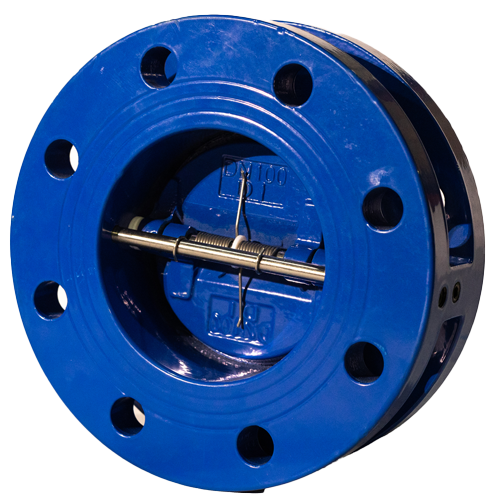
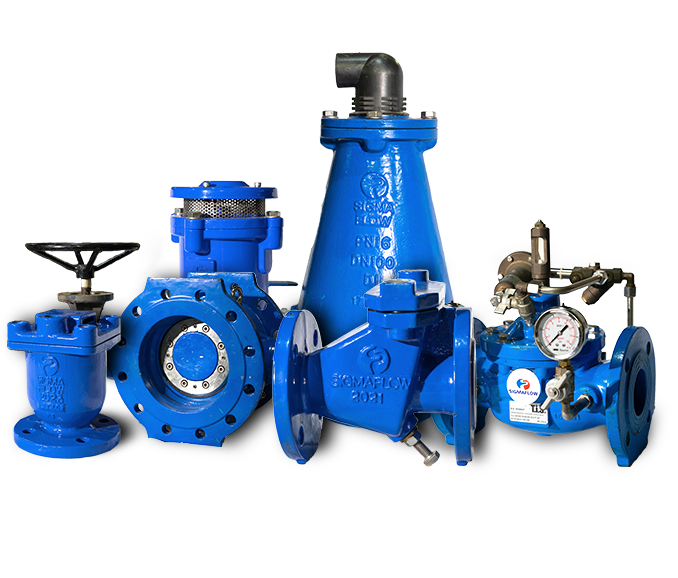
Non Return Valve
Sigma Flow's
Metal Seated Gate Valve
The purpose of the wedge shape is to ensure high supplementary seating load that enables metal-sealed wedge gate valves to seal against not only high, but also low fluid pressure. The wedge shape also results in a seal on both sides of the gate. Since the wedge is in contact with the seats only when the valve is closed, the wedge gate valve offers a maximum resistance to wear, where turbulent flow is present.
Design Features
- Flanged end, Bolted bonnet
- Operation : Handwheel / Gear / Actuator
- Non-rising stem / Rising stem
Applicable Standards
- Manufacturing generally as per IS 14846
- Face to face as per IS 14846
- Testing as per IS 14846
Till a certain time, Gate valves were available with a metallic wedge only. But, in metal-seated gate valves, the lower housing i.e. the valve body, can get filled up with foreign particles like sand, rust and chalk deposits and thus may prevent the closing of the wedge in the end position. Besides, metal-to-metal seating cannot make the valve 100% leak proof. So there was a need for a valve that does not have a wedge-sack and also offers zero leakage. Resilient seated, gland-less type Gate valves meet these criteria. Thus, these soft sealing Gate valves quickly replaced the metal-seated valves, especially in potable water schemes. However, metal seated gate valves find their application in water pipes of pressure higher than 25 bar and also in varied industrial applications.

Sigma Flow's
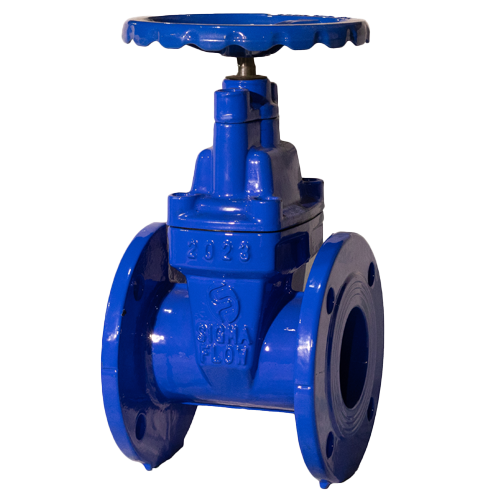
Resilient Seated Gate Valve
Sigma's resilient seat gate valves come with an elastomer-lined wedge. They are specially used for drinking water supply, wastewater and irrigation. Valves are of gland-less design and thus 100% leakproof. Low operating torque makes the valves easy to operate. These valves have a longer life and are maintenance-free too. They can be buried directly under the ground without constructing any valve chamber. The waterway is clear, unobstructed and free from pockets to allow smooth flow of water. Valves have corrosion-resistant fusion bonded epoxy coated body and bonnet.
Design Features
- Light weight design
- Low operating torque
- Valves are of non-rising spindle type
- Working temperature : 70 degree C
Applicable Standards
- Resilient seated to EN 1171
- Face-to-face to IS 14846/ EN 558-1
- Elastomer approved in acc. with WRAS
Benefits
- Fully encapsulated wedge
- Three O-rings for zero leakage
- Stems have rolled threads to reduce closing torque
- Potable Grade (WRAS) FBE coating both inside/outside
- Lower torque while operating as compared to conventional gate valves
- “Full Bore Design”, pocket-less type, to reduce turbulence and eliminate sand/gravel entrapment
- Savings in chamber cost as valve can be completely buried
- High quality acid resistant SS internals optionally available
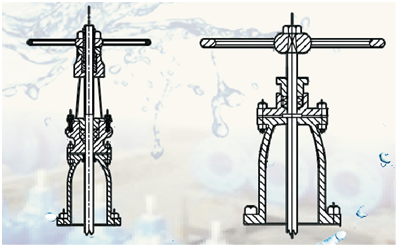
Gate valves are classified as either rising-stem or non-rising-stem valves.
In the non-rising-stem valve, the stem is threaded into the gate. As the handwheel on the stem is rotated, the gate travels up or down the stem on the threads while the stem remains vertically stationary.
Valves with rising stems are used when it is important to know by immediate inspection whether the valve is open or closed or when the threads exposed to the fluid could become damaged by fluid contamination. In this valve, the stem rises out of the valve bonnet when the valve is opened.
Gate Valve
General
Specifications
1
Gate Valve
Material
Specifications
2
Gate Valve
Other
Specifications
3
Have any question? Please contact us Sigma Connect
Air Valves
Butterfly Valves
Gate Valves
Non-Return Valves